
When your lower back is sore, moving can feel surprisingly difficult. You might notice that you're stiff when getting out of bed, uncomfortable bending forward, or hesitant to move in certain directions. Often, part of what's happening is that the muscles around your lower back have become protective. They tighten, movement becomes more restricted, and even ordinary movements can start to feel uncomfortable. This is a natural response to pain, particularly following a recent injury or flare-up. But when that protective muscle activity persists, it can contribute to the ongoing stiffness and sensitivity. One way to help settle things down is to introduce plenty of gentle, comfortable movement without putting much load through your back.
Think of it as a grease and oil change for your spine
These exercises aren't really strength exercises. We're not trying to work your abdominal muscles, brace your core or hold your spine rigidly in one position. In fact, we're aiming for almost the opposite.
Relax your trunk muscles. Breathe naturally. Let your back move.
The idea is to encourage repeated movement through the different segments of your lower back, without a great deal of compression or muscular effort. Gentle, repeated movement can help reduce protective muscle guarding, improve your confidence with movement and gradually make your back feel less sensitive. You don't need to stretch as far as possible, and you certainly don't need to force your way through significant pain. Small, relaxed movements performed frequently are often more useful than a handful of forceful stretches. The following four exercise groups provide different ways of doing this.
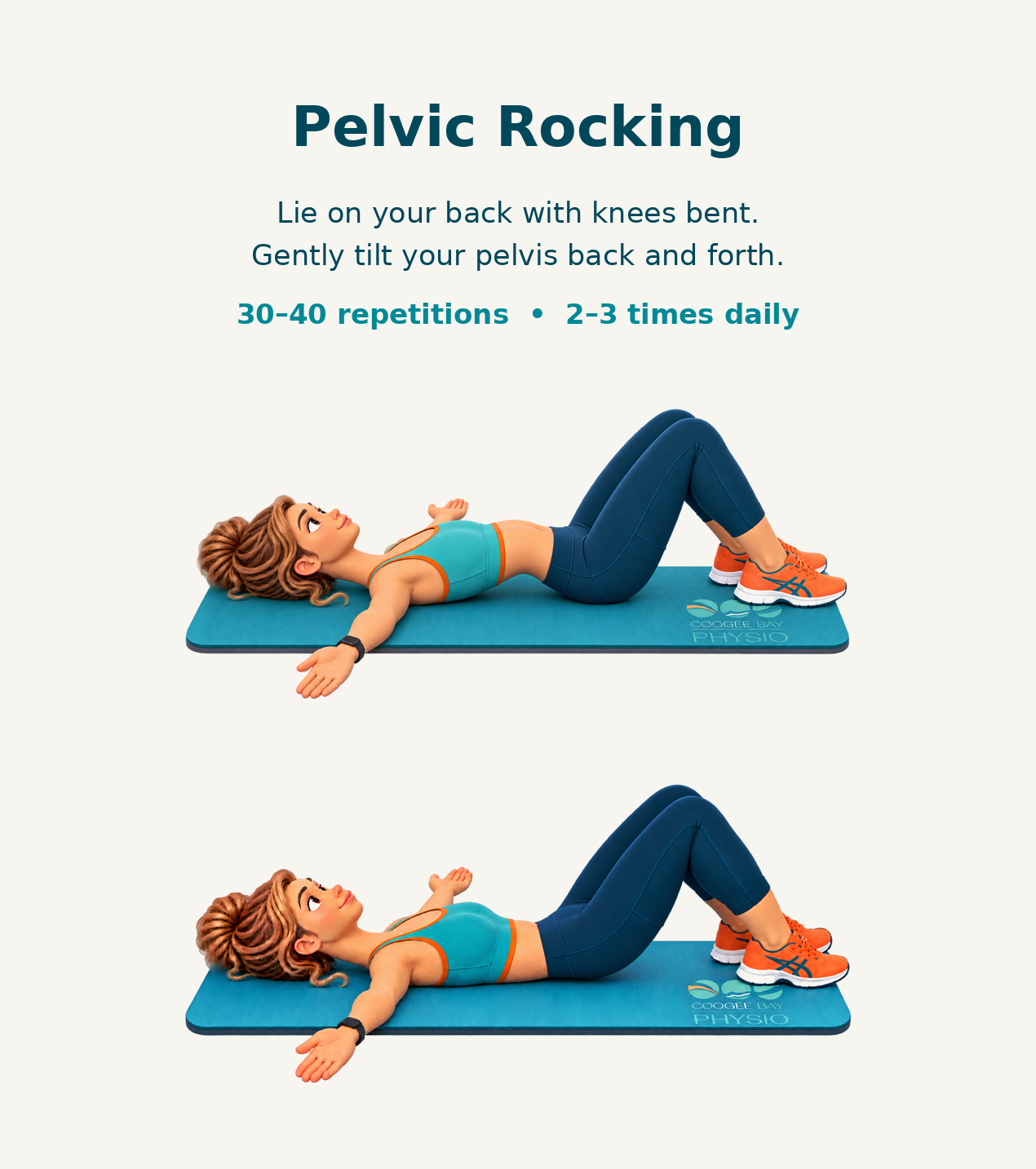
1. Pelvic Rocking
This is one of the simplest ways to introduce movement into a sore or stiff lower back. Lying down allows you to move your spine without having to support much body weight.
How to do it
Lie on your back with your knees bent and your feet resting comfortably on the floor. Gently roll your pelvis backwards, allowing your lower back to flatten slightly towards the floor, then forwards, allowing a small arch to develop beneath your lower back.
Continue rocking between these two positions in a relaxed, rhythmic manner.
The important part is to keep your abdominal muscles relaxed. Don't deliberately tighten your stomach to flatten your back. Think about letting your pelvis roll and your lower back follow. Keep breathing naturally throughout.
How much?
Aim for 30–40 gentle repetitions, 2–3 times throughout the day.
You don't need to make it a big movement, particularly if your back is quite sensitive. You might notice some initial stiffness or mild discomfort, but ideally the movement should become easier as you continue.
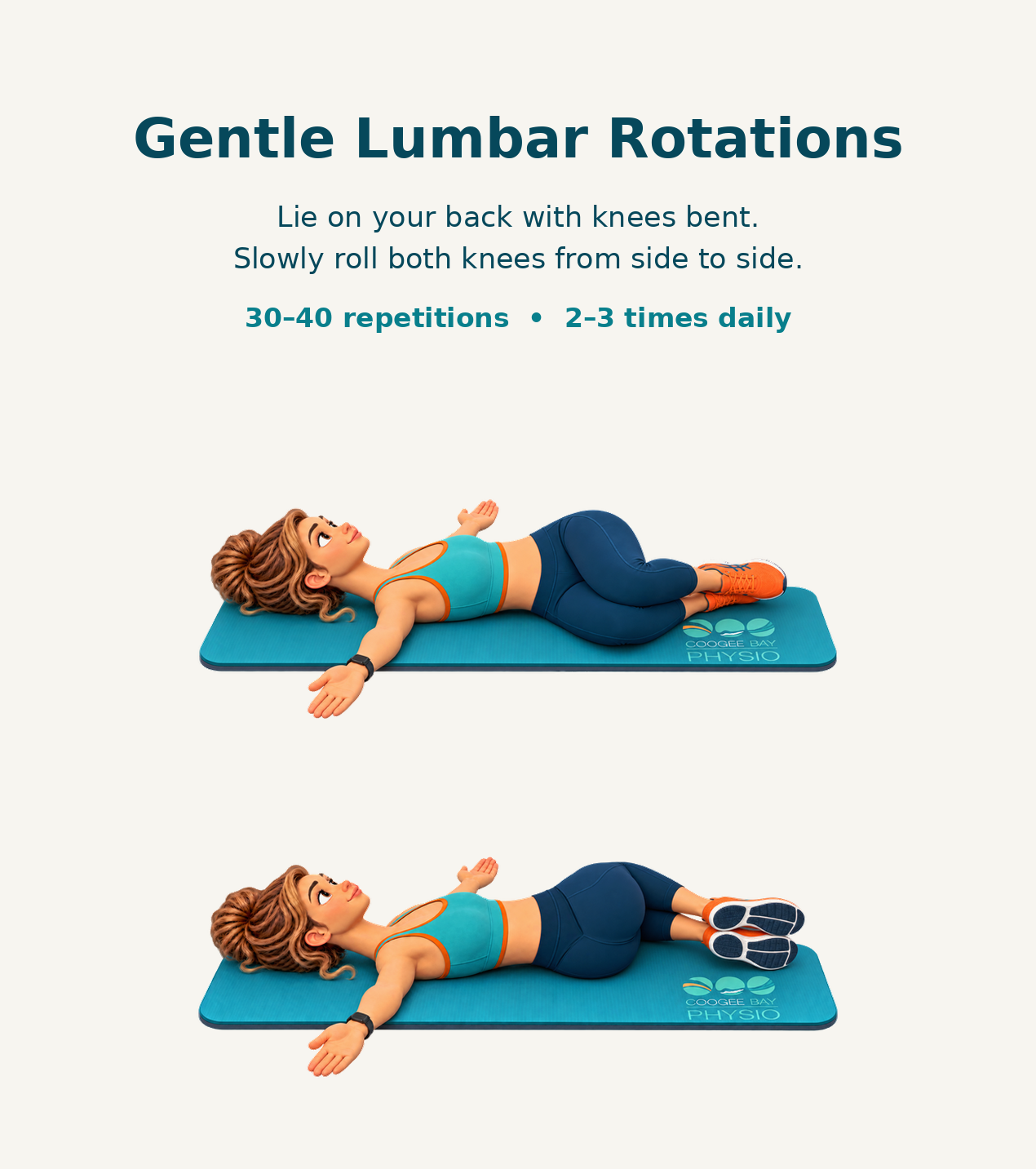
2. Gentle Lumbar Rotations
This exercise introduces a different direction of movement. Instead of rocking the pelvis forwards and backwards, we're encouraging the lower back to rotate gently from side to side, again with relatively little load through the spine.
How to do it
Lie on your back with your knees bent and your feet together. Allow both knees to roll slowly towards one side, letting your pelvis and lower back turn with them. Return through the middle and gently roll towards the other side.
Keep your shoulders resting comfortably on the floor and allow your stomach muscles to remain soft. We're not trying to hold the trunk rigid while the legs move.
Breathe naturally and allow the movement to develop a comfortable rhythm.
How much?
Aim for 30–40 movements from side to side, 2–3 times throughout the day.
You might find one direction feels easier than the other. Start with a smaller movement towards the uncomfortable side and gradually increase the range as things loosen up.
There's no need to force your knees towards the floor. The benefit comes from repeated, comfortable movement rather than reaching a particular position.
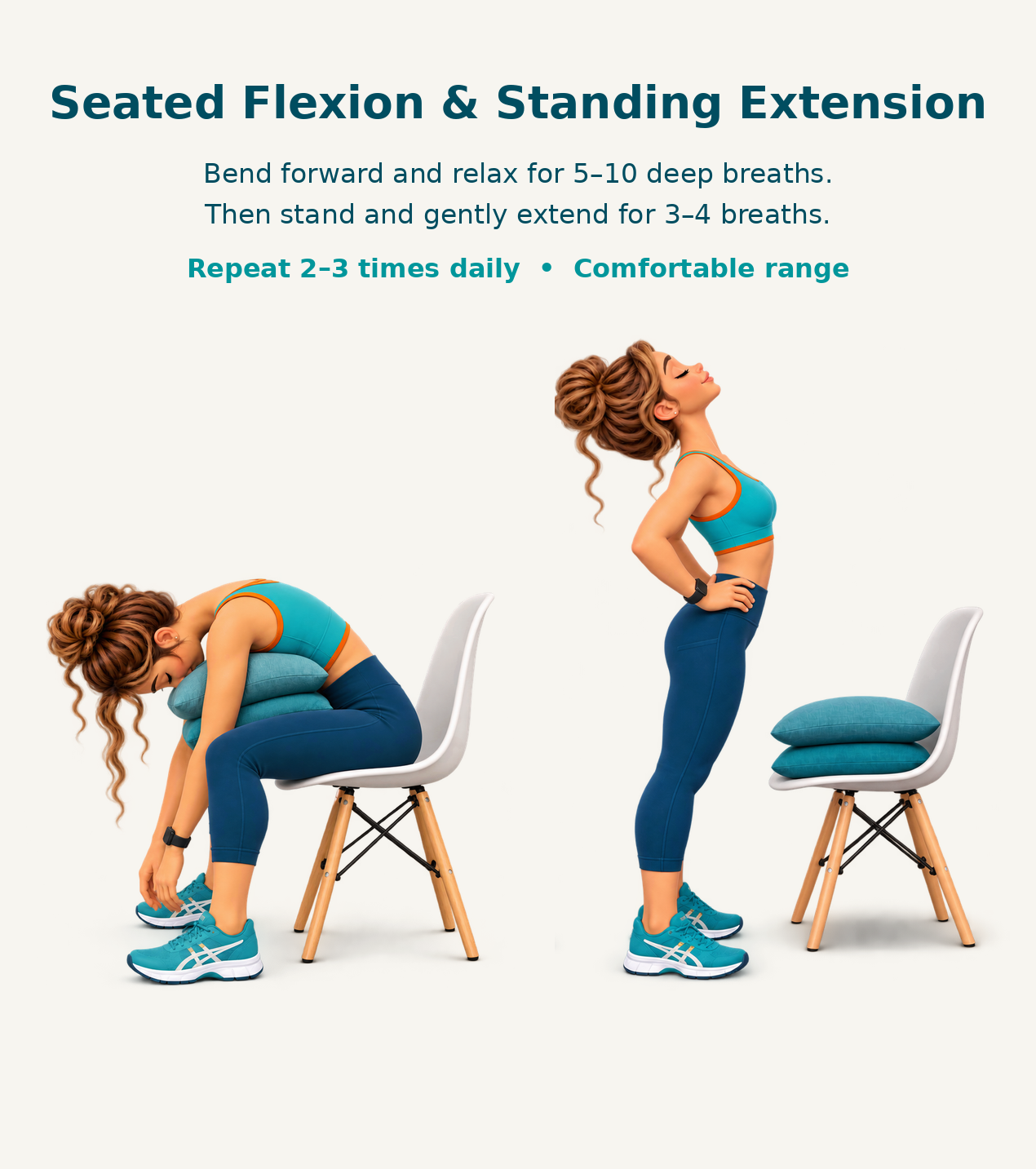
3. Seated Flexion & Standing Extension
Once your back is tolerating the gentler lying exercises, you can introduce larger movements into forward and backward bending. These exercises work well as a pair because they encourage movement in opposite directions.
Seated forward flexion
Sit on a chair with your feet comfortably apart. Place one or two pillows across your lap and gently bend forwards, allowing your upper body to rest against them.
Let your head, shoulders and arms relax. Take 5–10 slow, comfortable breaths, allowing your back muscles to soften with each exhalation. Rather than actively stretching further, let your body gradually settle into the position.
Standing extension
Stand with your feet comfortably apart and your hands resting on your hips or lower back for support. Gently lean backwards until you reach a comfortable position.
Stay at that angle for 3–4 relaxed breaths, without deliberately bracing your abdominal muscles or pushing further backwards. Then slowly return to standing.
How much?
Repeat the sequence 2–3 times throughout the day, according to comfort.
Neither movement needs to be forced. If your back is particularly sore or guarded, continue with the gentler lying exercises until these larger movements become more comfortable.
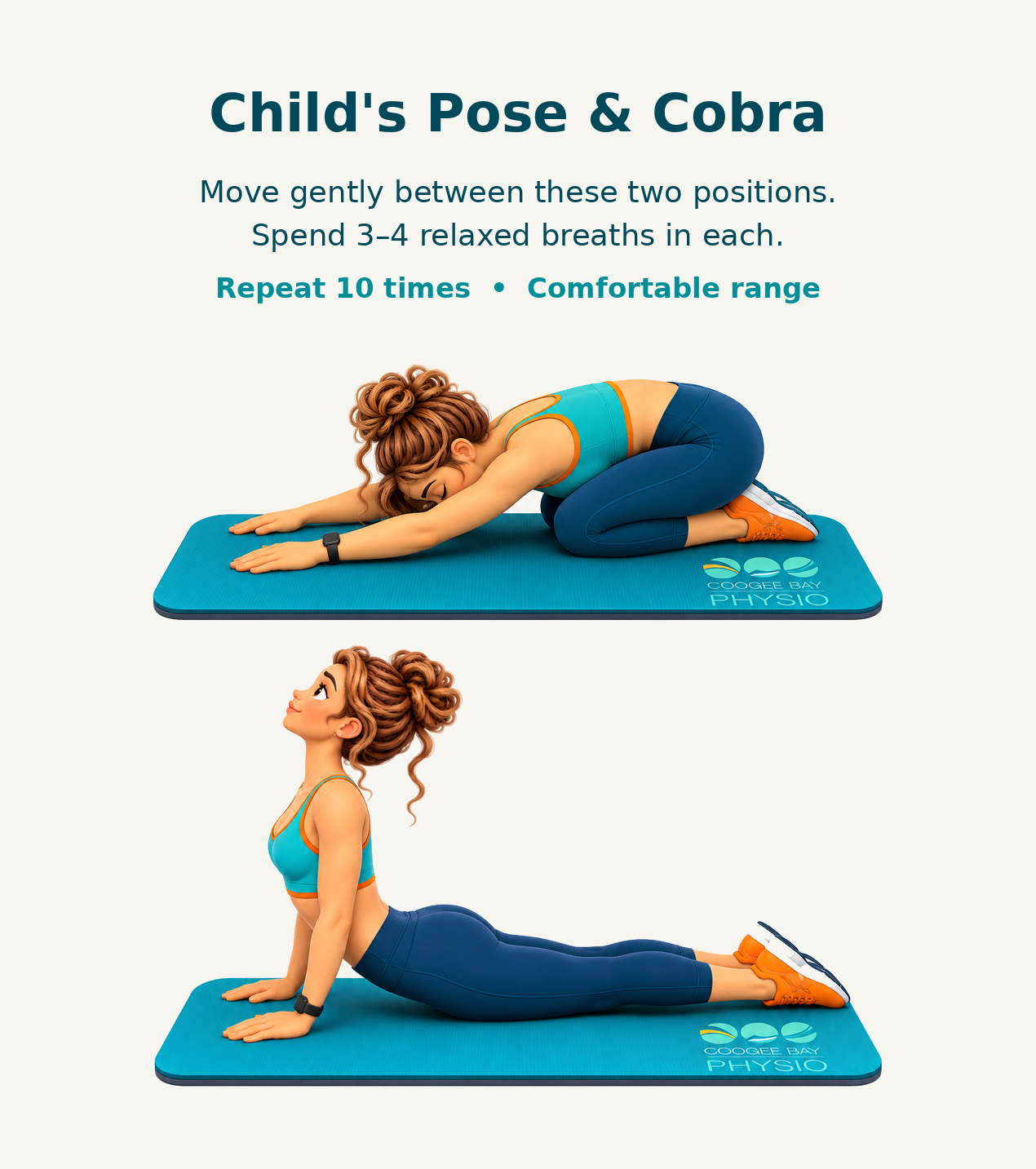
4. Child's Pose & Cobra
These exercises encourage larger movements into forward and backward bending, with much of your body supported by the floor. They're generally more appropriate once the initial pain and muscular guarding have eased.
Child's pose
Start on your hands and knees, gently moving your hips backwards towards your heels while reaching your arms forwards. Allow your back to round, your chest to lower and your head to relax.
Spend 3–4 comfortable breaths in this position, allowing your back and abdominal muscles to soften with each exhalation.
Cobra
Move forwards onto your stomach and gently press through your arms to lift your chest, allowing your pelvis and hips to remain supported by the floor.
Only lift as far as feels comfortable. Your elbows can remain bent. Spend another 3–4 relaxed breaths in this position, without deliberately tightening your stomach or clenching your buttocks.
How much?
Move back and forth between the two positions approximately 10 times, taking your time with each transition.
The aim isn't to achieve the deepest possible stretch in either direction. It's to become comfortable moving through a larger range, with relaxed breathing and as little unnecessary muscular effort as possible.
How often should I do these exercises?
For the gentler lying exercises, 2–3 sets of 30–40 repetitions, spread across the day, is a reasonable starting point. You can move more frequently if you find it helpful, but there's no need to chase a particular number of repetitions. The larger bending movements can generally be performed 2–3 times a day, depending on how your back responds. You also don't need to perform all four exercise groups from the beginning. If your back is particularly sore or guarded, start with pelvic rocking and gentle lumbar rotations. As things settle, introduce the larger forward and backward bending movements. The right amount is the amount your back can comfortably tolerate. A little discomfort doesn't necessarily mean you're causing damage, but repeatedly forcing movements that substantially aggravate your symptoms isn't the goal either.
Remember: movement, not muscle work
One of the most important things to understand about these exercises is that you're not trying to stabilise your spine by holding everything tight. Your trunk muscles will naturally do some work as you move. That's normal. But there's no need to deliberately brace your abdominal muscles, hold your breath or keep your lower back rigid. We're trying to move away from that protective stiffness. Think of it as giving your lower back a gentle grease and oil change: plenty of comfortable movement, relatively little load, and an opportunity for the muscles around your spine to relax. Over time, this can help your back become less sensitive to movement and make everyday activities feel easier again. Of course, exercises are only one part of managing lower back pain. The appropriate approach depends on your symptoms, how they started and how they're changing.
If you're experiencing new or progressive leg weakness, numbness around the saddle area, or changes in bladder or bowel control, seek urgent medical assessment rather than relying on these exercises.
And if your back pain isn't improving, keeps recurring, or you're unsure which movements are appropriate, a physiotherapy assessment can help clarify what's going on and what to do next.
The goal isn't to make your lower back perfectly still or perfectly strong before you use it. It's to help you feel comfortable moving it again.