It might have happened when you bent down to pick something up, turned awkwardly, or simply got out of bed one morning. Sometimes there's no obvious moment at all — your back just becomes increasingly sore as the day goes on.
And when the pain is surprisingly intense, it's natural to wonder whether you've pulled a muscle, injured a disc or damaged something in your spine.
But does the amount of pain you're feeling necessarily tell us how much damage has occurred?
Not always. To understand why, it helps to look at what might actually be happening in your back.
So, what might actually be hurting?
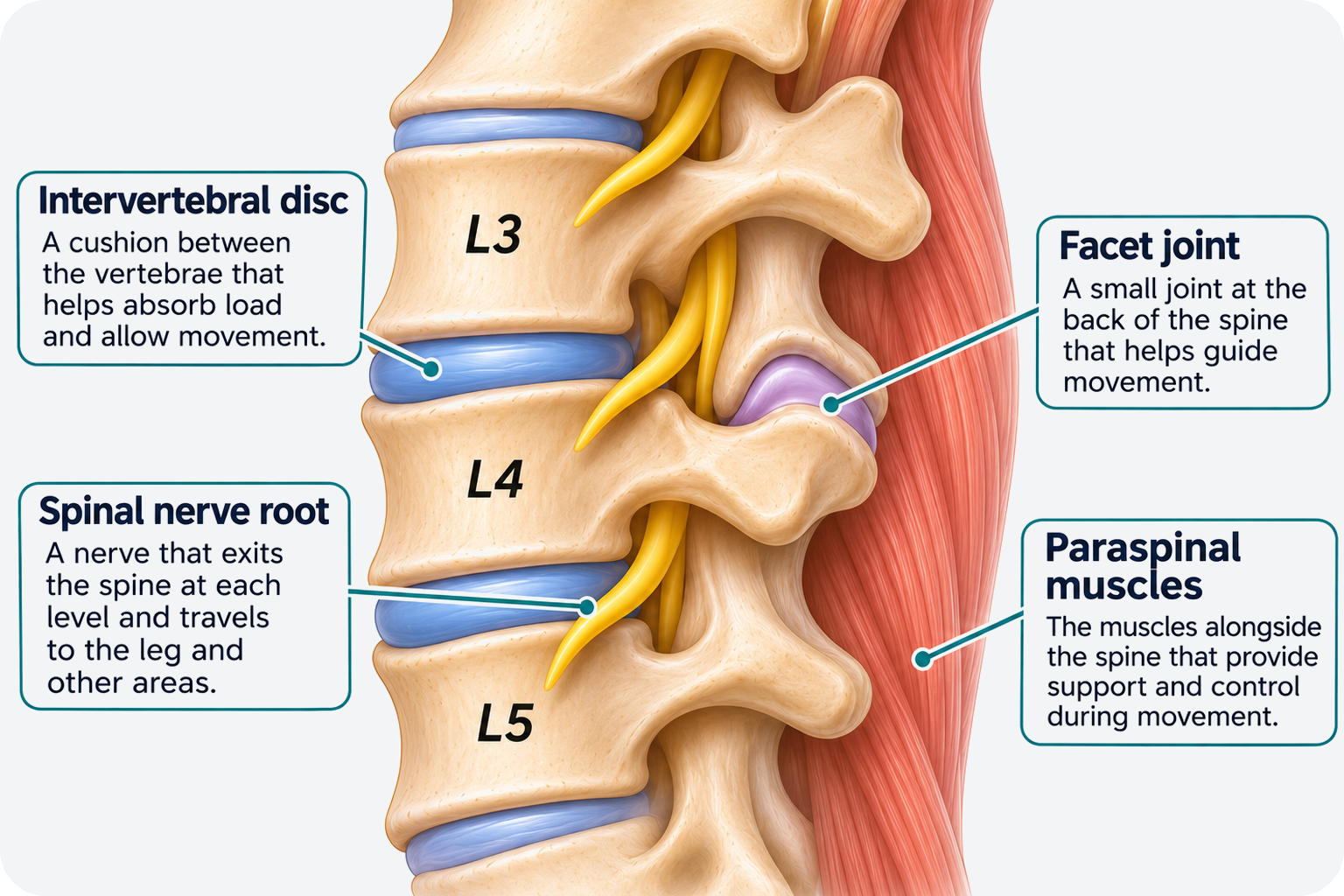
Your lower back contains several structures that can contribute to pain — muscles, ligaments, joints, discs and nerve roots.
Sometimes a particular structure has been strained or irritated. A muscle or ligament might have been overloaded, a joint may have become sensitive, or a disc may be contributing to the symptoms.
But often, there's no single structure we can confidently identify as the cause. And that doesn't mean the pain isn't real.
Importantly, something doesn't have to be badly damaged to become very painful. Even relatively minor irritation can trigger a much larger protective response from your body.
So why can something seemingly small hurt so much?
Why does it hurt so much?
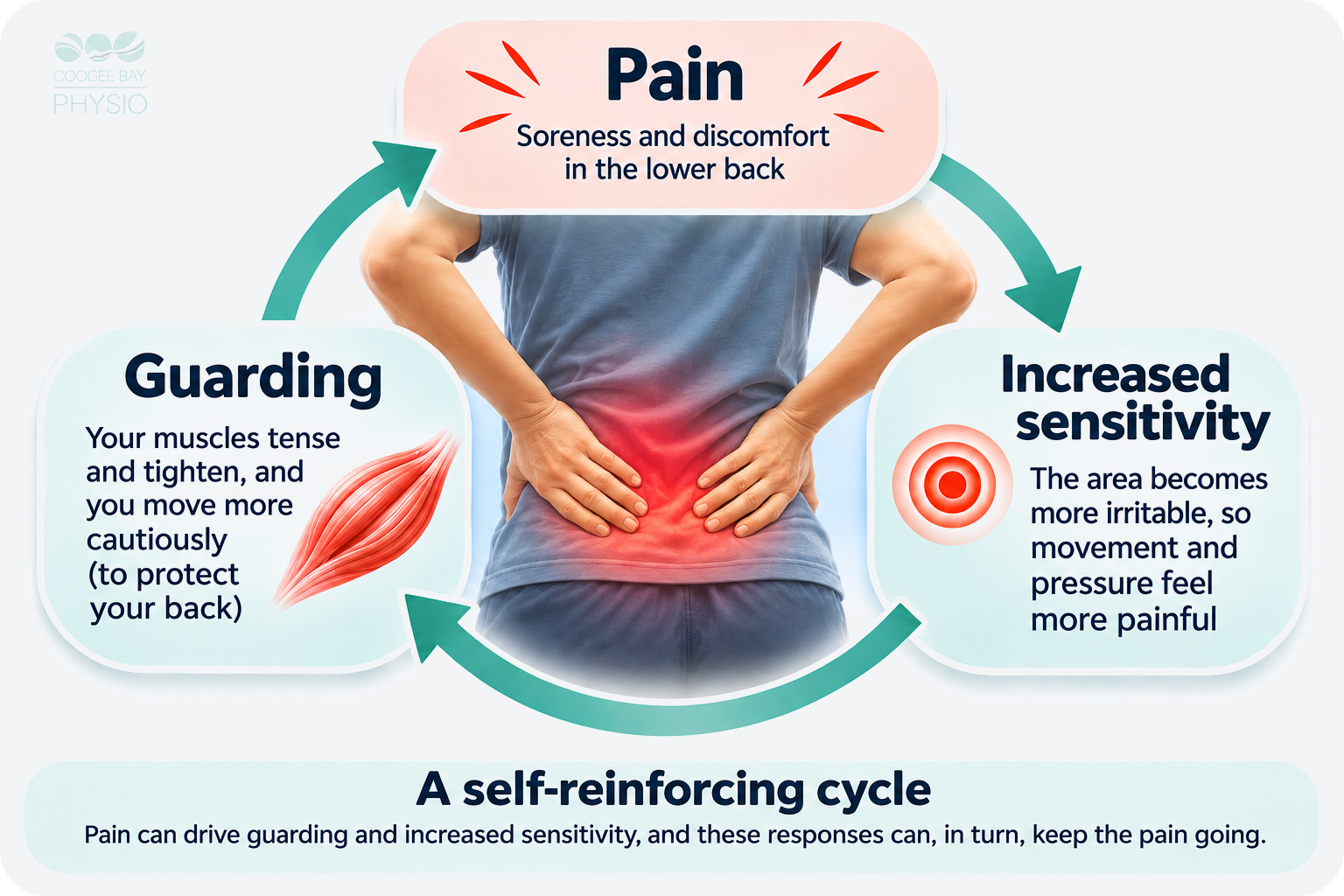
When your back becomes painful, your body often responds by tightening the surrounding muscles and making movement feel more uncomfortable.
This is a protective response. The muscles become more guarded, movements that would normally feel harmless may become painful, and your nervous system can become more sensitive to signals coming from the area.
The trouble is that these responses can reinforce one another. Pain encourages guarding, guarding makes movement more uncomfortable, and that discomfort can further increase sensitivity.
This helps explain why your back can feel severely painful, stiff or even 'locked up', without necessarily having suffered a serious injury.
But if pain intensity isn't a reliable measure of damage, how do we know whether something serious has happened?
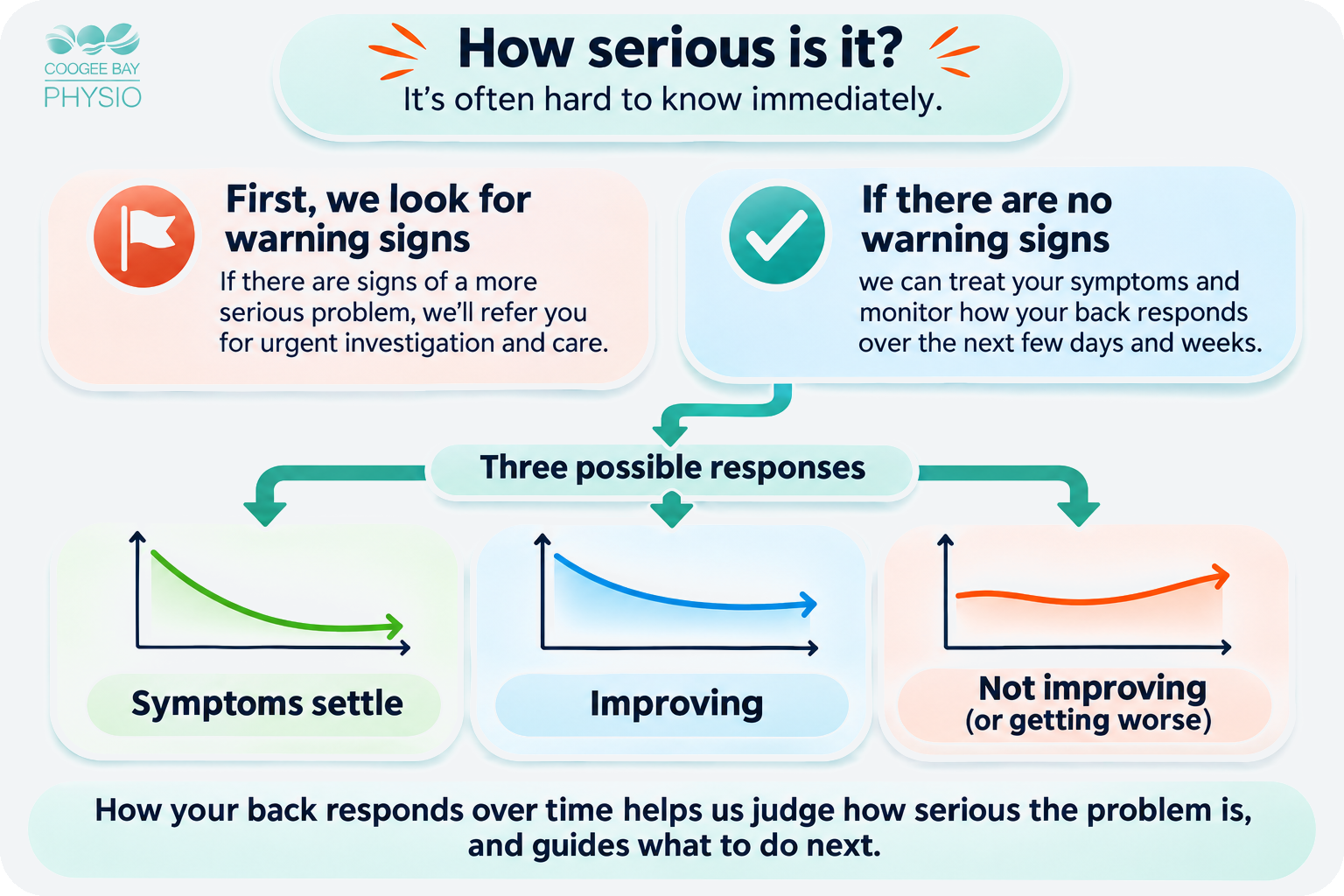
How do we know if something serious has happened?
Severe back pain can be frightening, particularly when it seems to have come out of nowhere. But the intensity of your pain doesn't necessarily tell us how serious the underlying problem is.
The first step is to look for warning signs that might suggest something more serious — such as a fracture, infection or significant nerve involvement. If these are present, further investigation or urgent medical assessment may be needed.
If there are no concerning warning signs, we can usually begin managing your symptoms while monitoring how your back responds over the following days and weeks.
Some people improve quite quickly. Others make gradual progress, with some discomfort lingering along the way. And occasionally, symptoms don't improve as expected, or begin getting worse.
How your back responds over time gives us valuable information. It helps us decide whether to continue with the current approach, adjust treatment or investigate further.
The important thing is that we don't have to identify one specific damaged structure to start helping you recover.