

Arthritis & Joint Pain
1. Something in there doesn't feel right…

How did it start?
Sometimes there isn't an obvious injury or a particular moment when something went wrong.
A joint might gradually become sore or stiff, start aching after you've been on your feet for a while, or simply feel different from how it used to.
Why does that make you wonder?
Maybe there's an old injury in the back of your mind. Maybe you're noticing things you put down to getting older. Or perhaps you just can't think of a good reason why it's started.
When there isn't an obvious explanation, it's natural to wonder whether something inside the joint has changed.

How did it start?
Sometimes there isn't an obvious injury or a particular moment when something went wrong.
A joint might gradually become sore or stiff, start aching after you've been on your feet for a while, or simply feel different from how it used to.
Why does that make you wonder?
Maybe there's an old injury in the back of your mind. Maybe you're noticing things you put down to getting older. Or perhaps you just can't think of a good reason why it's started.
The Takeaway
When there isn't an obvious explanation, it's natural to wonder whether something inside the joint has changed.
But wondering what's happening inside the joint and knowing what's actually there are two different things.
2. Could something be worn down or torn?

Do joint structures change over the years?
Yes. Depending on the joint, those changes might be described as osteoarthritis, cartilage wear, degeneration, a meniscal or labral tear, or simply “wear and tear”.
But does that explain what you're feeling?
Not necessarily. Having symptoms doesn't tell us exactly what the joint looks like inside — or how much any structural change might be contributing to what you're feeling.
So there may be structural changes in the joint — but symptoms alone can't tell us exactly what's there or how important those changes are.
Do joints change over time?
Yes. Depending on the joint, those changes might be described as osteoarthritis, cartilage wear, degeneration, a meniscal or labral tear, or simply “wear and tear”.
But does that explain what you're feeling?
Not necessarily. Having symptoms doesn't tell us exactly what the joint looks like inside — or how much any structural change might be contributing to what you're feeling.
The Takeaway
So even though there may be structural changes in a joint, symptoms alone can't tell us exactly what's there, how important those changes are, or how much they might be contributing to what you're feeling.
3. Ok well, does that mean I need to get an X-ray or an MRI or something?
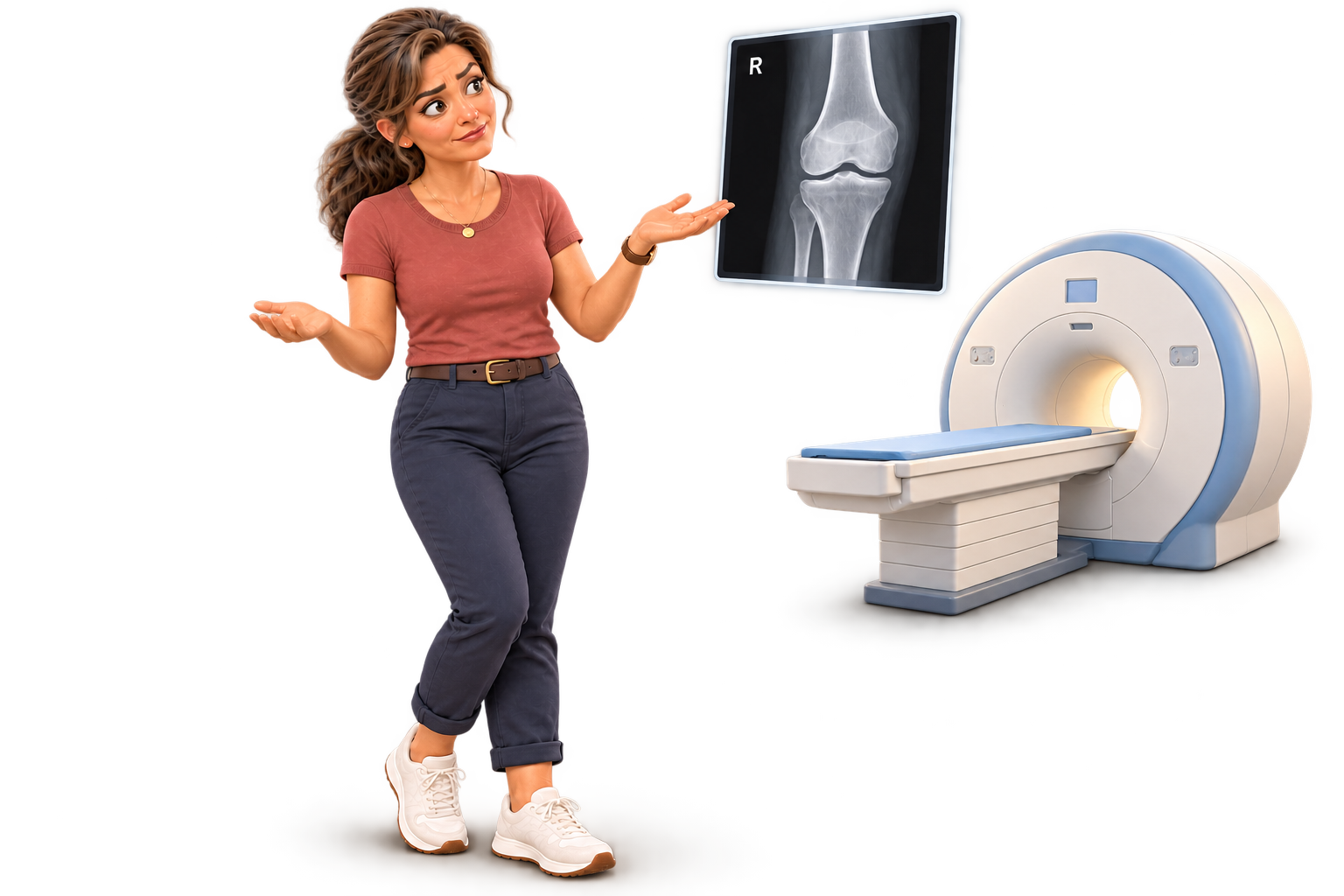
Is there a reason we need to investigate now?
If there has been a recent significant injury or force, a sudden or concerning change in symptoms, or something else that makes us suspicious of a more serious problem, there may be a good reason to investigate further.
If none of those things is present, there is usually less urgency to find out exactly what everything looks like inside.
Would knowing actually change what we do?
A scan can certainly give us more information. But if what we do next is likely to be the same either way, knowing exactly what everything looks like may not change very much.
Is more information always helpful?
For some people, having a name and an image for the problem is reassuring. For others, words such as degeneration, tear or bone-on-bone can make a joint suddenly seem much more fragile.
And even when a scan does show wear or structural change, it doesn't necessarily tell us whether the joint will keep getting worse, whether using it is causing more damage, or whether surgery will eventually be necessary.
So a scan can be useful — but more information isn't automatically more useful information.
Is there a reason we need to investigate now?
If there has been a recent significant injury or force, a sudden or concerning change in symptoms, or something else that makes us suspicious of a more serious problem, there may be a good reason to investigate further.
What if none of those things are present?
If there hasn't been a significant injury, sudden change or anything else concerning, there is usually less urgency to find out exactly what everything looks like inside.
A scan can certainly give us more information. But if what we do next is likely to be the same either way, knowing exactly what's there may not change very much.
Is more information always helpful?
Not necessarily. For some people, having a name and an image for the problem is reassuring.
For others, words such as degeneration, tear or bone-on-bone can make a joint suddenly seem much more fragile.
The Takeaway
Even when a scan shows wear or structural change, it doesn't necessarily tell us whether the joint will keep getting worse, whether using it is causing more damage, or whether surgery will eventually be necessary.
So a scan can be useful — but more information isn't automatically more useful information.
4. I already know I've got arthritis. So what can I actually do about it?

What if I already know what's there?
You might already have had an X-ray or MRI and been told there is osteoarthritis or “wear and tear” in the joint.
Maybe you've talked it through with your GP or specialist. Perhaps joint replacement has even been mentioned as something you might need one day.
Does knowing what's there tell me what I should do?
Not necessarily. Knowing what the joint looks like doesn't answer everything.
So what are the useful questions?
How much should you keep using it? Can you make it feel better? Can you get stronger? Can you keep doing the things you enjoy? And if surgery might be needed eventually, what can you do in the meantime?
Those are often much more useful questions than simply knowing that arthritis is there.
What if I already know what's there?
You might already have had an X-ray or MRI and been told there is osteoarthritis or “wear and tear” in the joint.
Maybe you've talked it through with your GP or specialist. Perhaps joint replacement has even been mentioned as something you might need one day.
Does knowing what's there tell me what I should do?
Not necessarily. Knowing what the joint looks like doesn't answer everything.
It doesn't automatically tell you how much you should use it, what you should avoid, or what you might still be able to improve.
So what are the useful questions?
How much should you keep using it? Can you make it feel better? Can you get stronger?
Can you keep doing the things you enjoy? And if surgery might be needed eventually, what can you do in the meantime?
The Takeaway
Knowing that arthritis is there is useful information, but it doesn't tell you everything about what the joint can still do.
What you can improve, what you can keep doing, and how you manage the joint from here are often much more useful questions.
5. So whether we know exactly what's in there or not… what can we actually do?
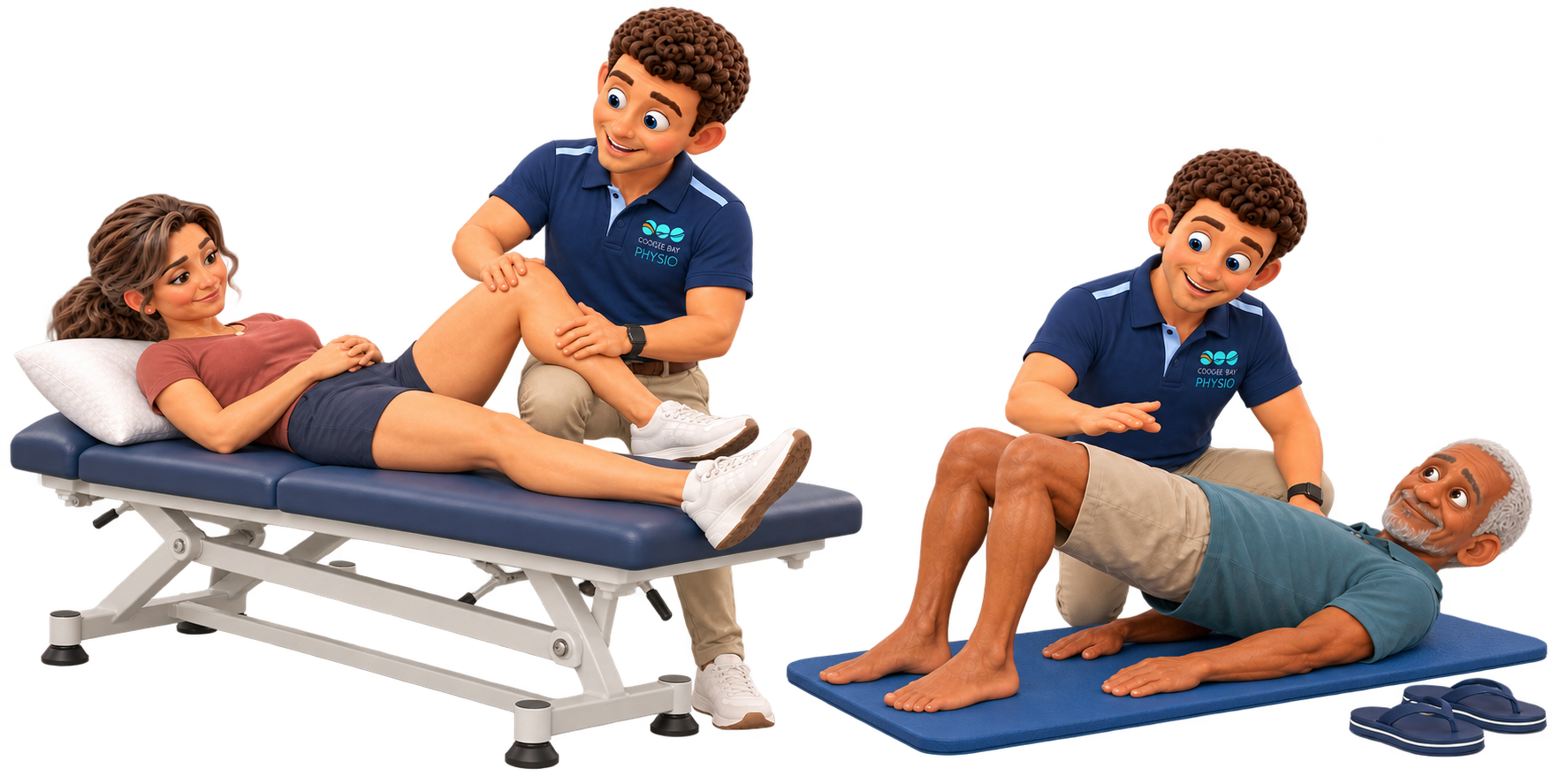
What can we work on?
We can start with the things that can improve.
That might mean settling an irritable joint, restoring movement, rebuilding strength and gradually increasing what the joint can tolerate.
And then?
We see what happens.
If symptoms settle, movement improves, strength returns and you're able to do more, that's useful information in itself.
What does improvement tell us?
If we don't know exactly what structural changes are present, improvement tells us that whatever might be there isn't preventing meaningful improvement.
And if we already know there is arthritis or wear and tear, improvement tells us that those structural changes aren't preventing meaningful improvement either.
We don't necessarily need to know exactly what everything looks like inside a joint before we start trying to make it feel and function better.
What can we work on?
We can start with the things that can improve.
That might mean settling an irritable joint, restoring movement, rebuilding strength and gradually increasing what the joint can tolerate.
And then?
We see what happens.
If symptoms settle, movement improves, strength returns and you're able to do more, that's useful information in itself.
What does improvement tell us?
If we don't know exactly what structural changes are present, improvement tells us that whatever might be there isn't preventing meaningful improvement.
We can learn something useful from how the joint responds, even without knowing exactly what everything looks like inside.
The Takeaway
If we already know there is arthritis or wear and tear, improvement tells us that those structural changes aren't preventing meaningful improvement either.
We don't necessarily need to know exactly what everything looks like inside a joint before we start trying to make it feel and function better.
6. But the wear and tear is still on there, right?

Does treatment actually change the wear and tear?
Not necessarily. Treatment doesn't necessarily change what the cartilage, meniscus or other structures look like.
So what can change?
The structural state of a joint and how that joint feels and functions aren't the same thing.
There are things we can influence — how irritable the joint is, how well it moves, the strength around it, how much load it can tolerate, and ultimately what you're able to do.
Does that still make a difference?
Absolutely. Symptoms can settle considerably and the joint can become much less limiting, even though the structural changes are still there.
We don't necessarily have to change what a joint looks like to change how it feels, functions and what you're able to do with it.
Does treatment actually change the wear and tear?
Not necessarily. Treatment doesn't necessarily change what the cartilage, meniscus or other structures look like.
But what a joint looks like and how that joint feels and functions aren't the same thing.
So what can change?
There are things we can influence — how irritable the joint is, how well it moves and the strength around it.
We can also work on how much load it can tolerate and, ultimately, what you're able to do.
Does that still make a difference?
Absolutely. Symptoms can settle considerably and the joint can become much less limiting.
That can happen even though the structural changes themselves are still there.
The Takeaway
The wear and tear may still be there, but that doesn't mean how the joint feels and functions has to stay the same.
We don't necessarily have to change what a joint looks like to change how it feels, functions and what you're able to do with it.
7. So what are we aiming for?

Does the joint need to be perfect?
No. Sometimes the goal is to get a problem settled and get you back to doing everything you want to do.
But particularly with more established arthritis, success doesn't necessarily mean making the joint feel perfect.
So what does success look like?
It may be to keep the joint as comfortable, strong and capable as possible, maintain the things you can still do, and slow the loss of function over time.
What if joint replacement has already been discussed?
Surgery may eventually become the right option. But until then, there can still be a lot worth working on.
Successful treatment might mean keeping you functioning well enough that surgery isn't necessary yet.
Does the joint need to be perfect?
No. Sometimes the goal is to get a problem settled and get you back to doing everything you want to do.
But particularly with more established arthritis, success doesn't necessarily mean making the joint feel perfect.
So what does success look like?
It may be to keep the joint as comfortable, strong and capable as possible.
That might mean maintaining the things you can still do and helping you maintain your function over time.
What if joint replacement has already been discussed?
Surgery may eventually become the right option.
But until then, there can still be a lot worth working on — keeping you active, maintaining strength and preserving as much function as possible.
The Takeaway
Success doesn't have to mean making an arthritic joint perfect. It can mean keeping it comfortable, capable and useful for the things that matter to you.
And for someone who may eventually need a joint replacement, successful treatment might mean keeping them functioning well enough that surgery isn't necessary yet.
So… where do I start?
Whether you're wondering if something inside the joint has changed, or you already know you have arthritis, we can start with what your joint is doing now.
We'll identify the things we can work on, look for anything that needs further investigation, and help you decide on the most useful next step.
Book an Initial Consultation